

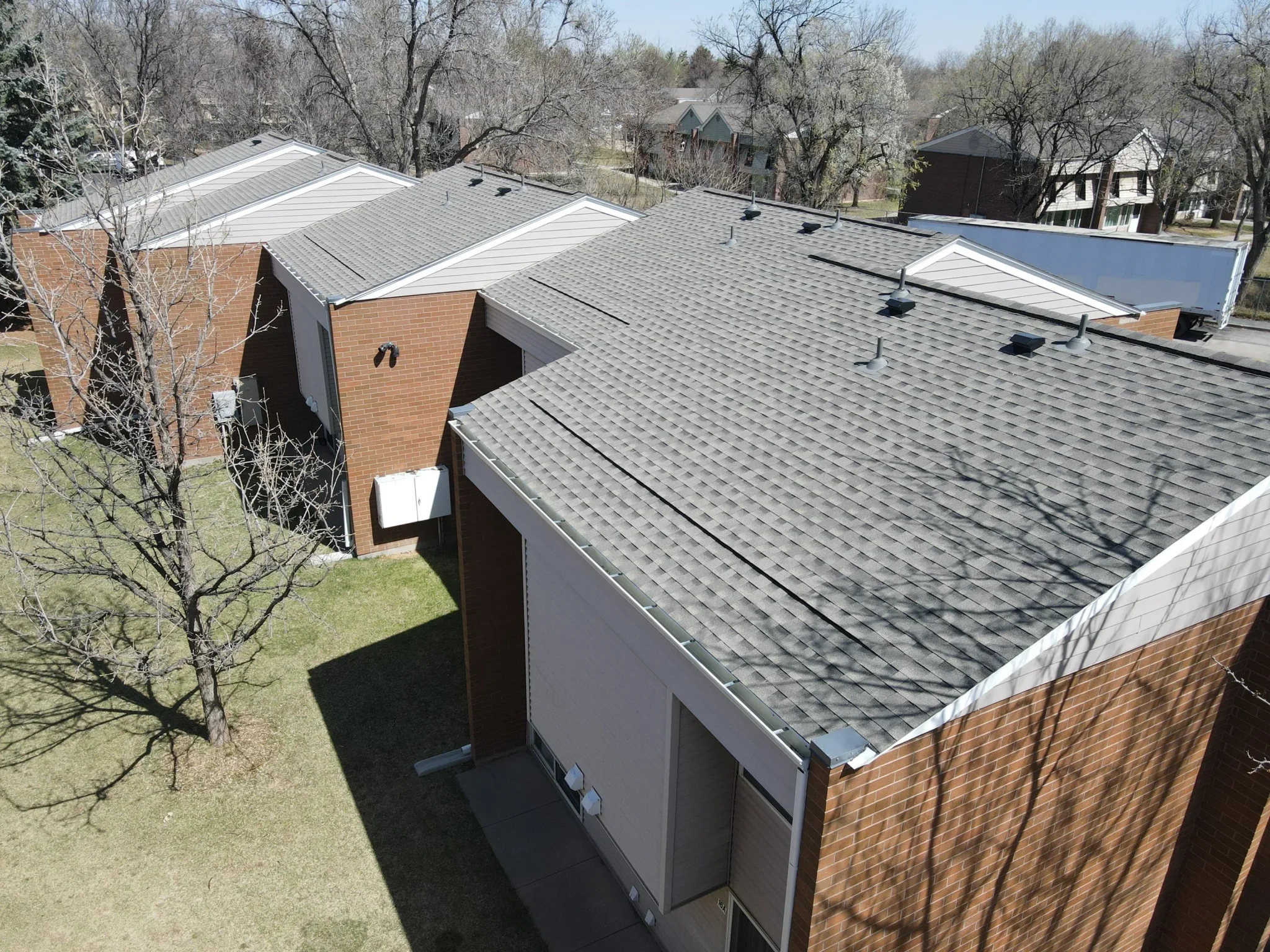
Quick answer: Repair is often appropriate for a gutter with an isolated loose hanger, small leaking seam, or limited drainage problem. Replacement may make more sense when sections are badly bent, repeatedly separating, rusted through, incorrectly sized, or attached to deteriorated fascia. The right decision depends on the condition and layout of the entire gutter system, not just one visible symptom.
Gutters rarely get much attention until water starts spilling over the edge. For homeowners in Geneva, Batavia, and St. Charles, that can happen during a summer downpour, when leaves collect in fall, or when snow and ice create extra stress at the roofline.
The important question is not simply whether the gutters look worn. It is whether they are moving water away from the roof edge, siding, and foundation as intended. Sometimes cleaning or a small repair restores that function. Other times a better-designed system is the more sensible investment.
Seven Signs Your Gutters Need Professional Attention
1. Water spills over the edge during heavy rain
Overflow may mean debris is blocking the gutter or downspout. It can also indicate poor slope, insufficient downspout capacity, or a system that does not handle runoff from the roof effectively.
Before replacing anything, ask for an assessment that distinguishes blockage from a design or sizing issue. Installing new gutters without correcting the cause of overflow may leave you with the same problem.
2. Sections sag or separate from the roofline
Sagging gutters may have loose or failed hangers, overloaded sections, or deteriorated wood behind the mounting points. A sound section with a fastening problem may be repairable. Repeated separation across multiple runs can signal a larger issue.
3. Leaks return at the same seams or corners
An isolated joint may be resealed or repaired if the surrounding material is solid. When multiple joints fail repeatedly or the gutter has widespread corrosion, replacement may be more effective than a series of temporary patches.
4. Paint peels or fascia boards look soft
Peeling paint, dark staining, or soft wood behind a gutter can point to repeated moisture exposure. The affected fascia should be evaluated before the gutter is reattached. Mounting new metal to unsound wood does not fix the underlying problem.
5. Water collects near the foundation or basement windows
Water spilling beside the house may be caused by a disconnected, damaged, short, or poorly directed downspout. Sometimes an extension or discharge adjustment is the main fix. Persistent pooling deserves a broader drainage review, especially if ground slope contributes to the problem.
6. Gutters are bent, cracked, or damaged after a storm
Branches, wind-driven debris, snow loads, and ice can distort sections. Damage in a single accessible location may support a repair; major deformation can make the gutter difficult to realign or drain properly.
7. You keep paying for the same problem
If sections need frequent rehanging, seams keep reopening, or heavy rain repeatedly exposes drainage limits, ask whether the system is approaching the point where replacement offers better long-term value. Frequent trouble does not guarantee full replacement is needed, but it is a reason to assess the whole layout.
When a Gutter Repair Is Usually the Better Starting Point
Repair may be a sensible choice when most of the gutter system is structurally sound. That could mean replacing a failed hanger, correcting a section’s slope, resealing an isolated seam, fixing an outlet, or extending a downspout.
Cleaning is a separate first step if leaves or debris are the primary restriction. A clear gutter can still have a slope or capacity problem, while a properly sized gutter can overflow if the downspout is blocked.
Ask the contractor to explain whether the recommendation resolves the source of the problem, how much of the system is affected, and whether damaged fascia or soffit needs attention.
When Full Replacement May Make More Sense
A replacement conversation becomes more practical when there is broad rusting or cracking, severe distortion, repeated fastening failures, unsuitable sizing, or extensive damage at multiple corners and connections.
Replacement also creates an opportunity to review downspout placement, the roof’s drainage area, and the route water takes once it reaches the ground. A well-installed gutter still cannot solve a grading or underground drainage problem by itself, so those factors should be considered separately.
Hammerfall Roofing offers seamless aluminum gutter systems in 5-inch and 6-inch options, with downspouts sized and routed for the home. The right size is not determined by a blanket rule: roof area, roof pitch, rainfall intensity, gutter profile, and downspout layout all matter.
Are 6-Inch Gutters Always Better Than 5-Inch Gutters?
No. A larger gutter can handle more water under comparable conditions, but it is not always necessary and does not compensate for poor pitch, clogged outlets, or too few downspouts. The decision should be based on actual drainage needs and the home’s design.
For a Geneva or Batavia house with long roof runs, concentrated valleys, or recurring overflow, reviewing gutter capacity makes sense. For another house with a properly performing 5-inch system, targeted repairs and maintenance may be enough.
Should You Install Gutter Guards at the Same Time?
Gutter guards can reduce the amount of leaves and debris entering the system, particularly in mature-tree neighborhoods around the Fox Valley. However, they do not eliminate every maintenance task, guarantee clog-free performance, or prevent ice dams on their own.
If you are replacing gutters, ask whether a guard system is appropriate for your roof, local debris, and maintenance preferences. If the existing gutter has a drainage or sizing issue, correct that first; a cover is not a substitute for proper flow.
What a Complete Gutter Assessment Should Check
A useful assessment looks at roof drainage paths, gutter slope and condition, hangers, outlets, downspouts, fascia, and where the water discharges. Photographs can help show which sections need attention and why.
Hammerfall Roofing provides gutter repair and replacement in St. Charles and neighboring communities, including Geneva and Batavia. Its service includes targeted repairs, downspout adjustments, seamless replacement, and work involving affected fascia where needed. That allows homeowners to compare options based on the system’s condition rather than assuming every overflow requires new gutters.
Frequently Asked Questions
Can sagging gutters be repaired without replacing them?
Yes, in some cases. If the gutter material and supporting fascia are sound, new or adjusted fasteners may solve the sag. Widespread damage or repeated failure may require more extensive work.
Why do my gutters overflow even after cleaning?
Possible causes include inadequate slope, a restricted outlet, insufficient downspout capacity, or gutters that are undersized for roof runoff. A drainage assessment can identify which problem is present.
Will gutter guards stop ice dams in Illinois?
No. Gutter guards can reduce debris, but ice dams involve roof temperature, snow melt, refreezing, and roof-edge conditions. Insulation, ventilation, and correct roof detailing may also matter.
Protect Your Home With Gutters That Drain Properly
You should not have to guess whether a sagging or overflowing gutter needs a quick repair or full replacement. Hammerfall Roofing helps homeowners in Geneva, Batavia, St. Charles, and surrounding Fox Valley communities understand drainage problems and choose work suited to their homes.
Request a gutter assessment at hammerfallroof.com/contact or call (630) 345-8822.
Ready for a free roof assessment?
Owner-led service across St. Charles and nearby Illinois communities.